Spin drive
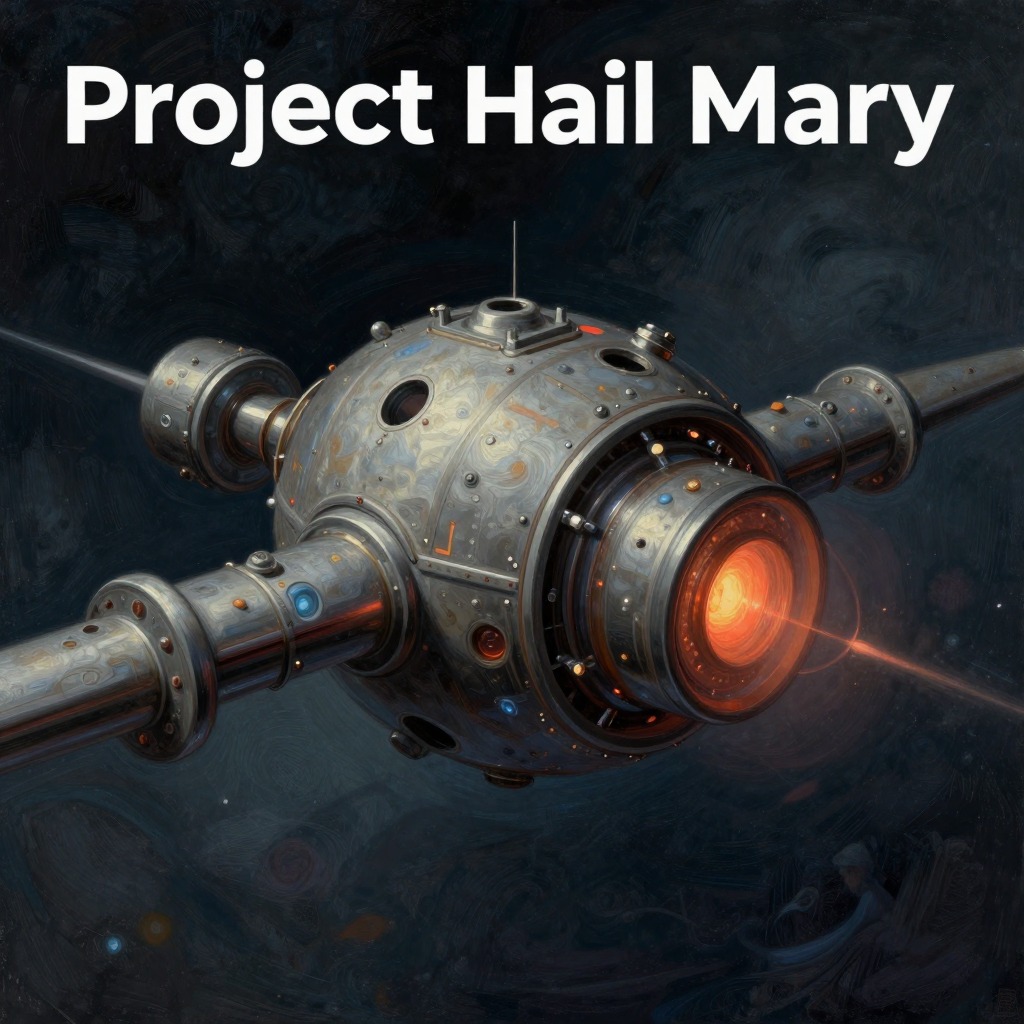
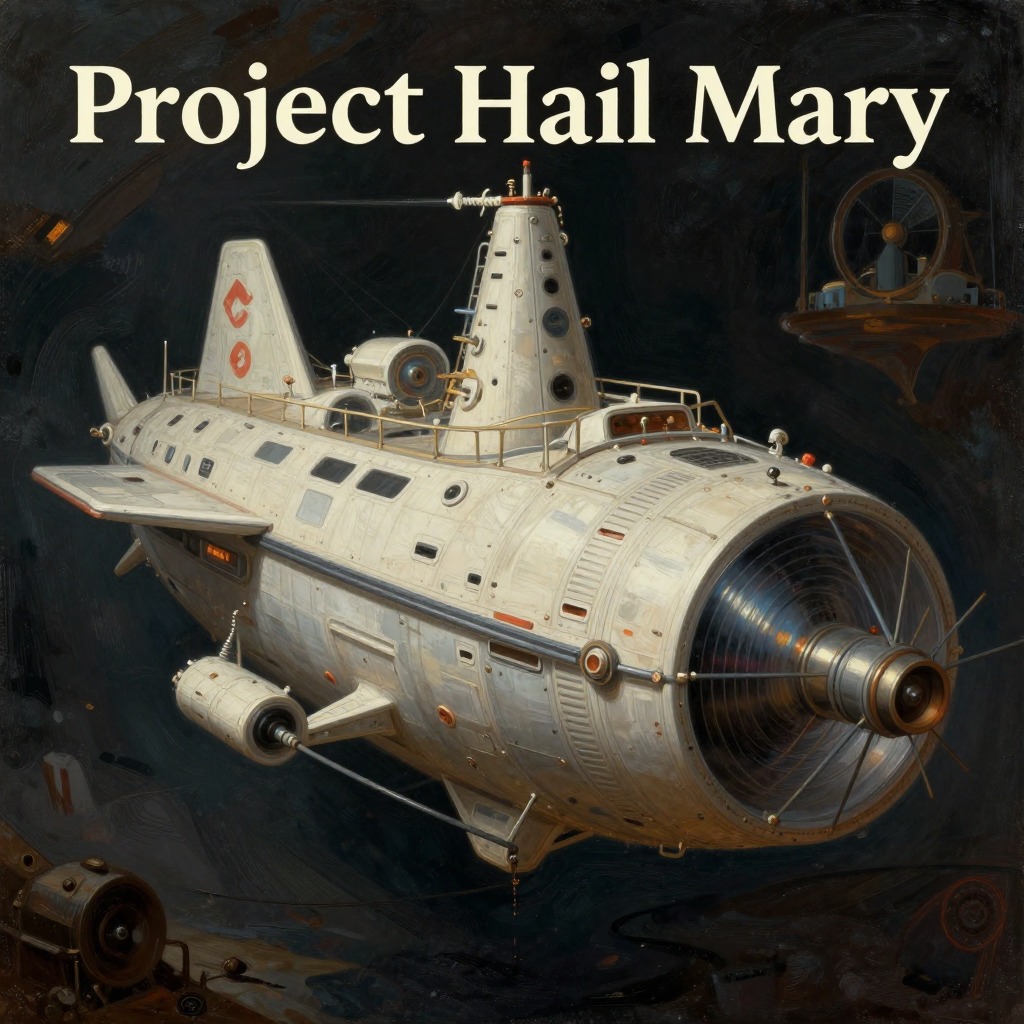
The spin drive is the revolutionary propulsion system that enables the Hail Mary's interstellar voyage, converting Astrophage fuel into thrust through a rotating mechanism that exploits the organism's ability to convert mass directly into energy. Designed by Russian engineer Dimitri Komorov, the spin drive represents a fundamental breakthrough in space travel, transforming a biological threat into the most efficient rocket engine ever conceived.
Design and Mechanism
The spin drive operates on a simple but ingenious principle. At its core is a triangular "revolver" made of high-tensile-strength transparent polycarbonate, mounted on a rotor. Astrophage fuel enters a nook between the revolver and the outer casing, where an internal IR emitter produces light at 4.26 and 18.31 microns—the wavelengths that attract Astrophage. The dim light generates weak thrust, enough to make the Astrophage stick to the revolver's surface. When the triangle rotates 120 degrees, that face now points out the back of the ship. The IR light intensity increases, causing the Astrophage to push very hard toward the light, their thrust—Petrova-frequency light—leaving the rear of the ship and pushing it forward. This design ensures that no part of the ship has to be in the blast area of the light. The Astrophage exhaust all their energy in four seconds, a limit calculated to prevent the force from breaking the revolver. The remaining third of the casing serves as a cleaning area, where a squeegee wipes dead Astrophage off the revolver. All three areas—cleaning, fueling, and thrusting—operate simultaneously, creating a continuous pipeline of thrust.
Energy Conversion and Performance
The spin drive's power derives from Astrophage's extraordinary energy-storage capability. As Dimitri demonstrated, a single Astrophage cell can absorb 1.5 megajoules of light energy, increasing its mass by 17 nanograms through mass conversion—the direct transformation of heat energy into mass via E=mc². When the Astrophage needs energy back, it converts that mass back into energy in the form of Petrova-frequency light, using it for propulsion. In tests, a prototype spin drive generated 60,000 Newtons of force for 100 microseconds, releasing 1.8 billion Joules of light energy that melted a metric ton of metal. The Hail Mary carries 1,009 individual spin drives, providing redundancy and allowing the ship to maintain thrust even if some units malfunction. The ship consumes approximately 6 grams of Astrophage per second, converting that mass into 540 trillion watts of energy—more intense than the surface of the sun.
Operational Characteristics
The spin drive's immense power output creates operational constraints. The Petrovascope, a sensitive instrument designed to detect trace amounts of Petrova-frequency light, cannot be used while the spin drive is active because the engine's output would overwhelm its sensors. The drive's exhaust is so powerful that using it within an atmosphere would create a fireball rivaling a nuclear explosion, as the IR light would ionize the air. This limitation forces careful planning during atmospheric operations, such as the sampling mission at Adrian. The spin drive also enables the ship's artificial gravity through constant acceleration, maintaining 1.5 g's during the journey to Tau Ceti and allowing the crew to function in a gravity-like environment throughout the voyage.
Significance and Legacy
The spin drive represents the culmination of human and Eridian technological achievement, transforming a cosmic threat into the means of salvation. Its development required the combined efforts of scientists and engineers from multiple nations, working under the direction of Eva Stratt. The drive's efficiency—using only 130 kilograms of Astrophage for a 150-million-kilometer journey—demonstrates the transformative potential of mass-energy conversion technology. Beyond its immediate function, the spin drive embodies the principle that even the most dangerous natural forces can be harnessed for survival, a theme that resonates throughout the Hail Mary mission.